

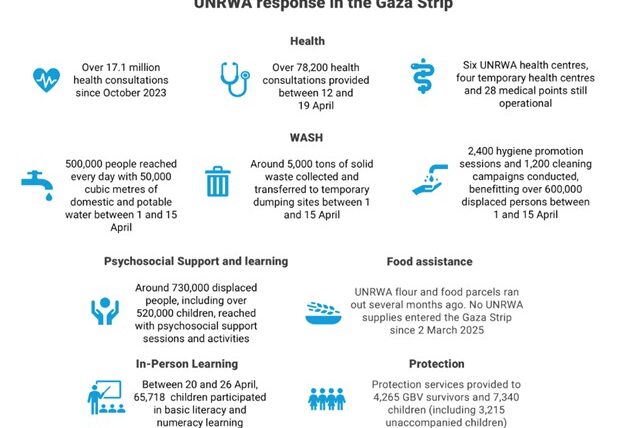
THE HUMANITARIAN CRISIS IN THE GAZA STRIP AND THE OCCUPIED WEST BANK, INCLUDING EAST JERUSALEM
Israeli forces’ activities reportedly escalated, including trench digging and earth mounds, restricting vehicle movement and limiting crossing between the Israeli-militarised zone marked by the so-called “Yellow Line” and other parts of the Gaza Strip. Airstrikes, shelling, and gunfire continue across residential areas, reportedly resulting in civilian casualties and damage to critical facilities. There are continued reports of environmental hazards, including pests and rodents, affecting residential areas across the Gaza Strip. Lack of chemical supplies for pest and rodent control remains a critical constraint to addressing the problem, as does a lack of lubricant oil that may reduce generator-supported waste and sewage operations in the near term and thereby increase public health risks. OCHA reports that the amount of aid entering the Gaza Strip fell by 37 per cent in January to March, compared to the first three-months of the ceasefire that has been in place since 10 October 2025. This coincides with reduced crossing operations, increased cargo returns, scanning malfunctions and other challenges.
This entry is original published by UNRWA.